
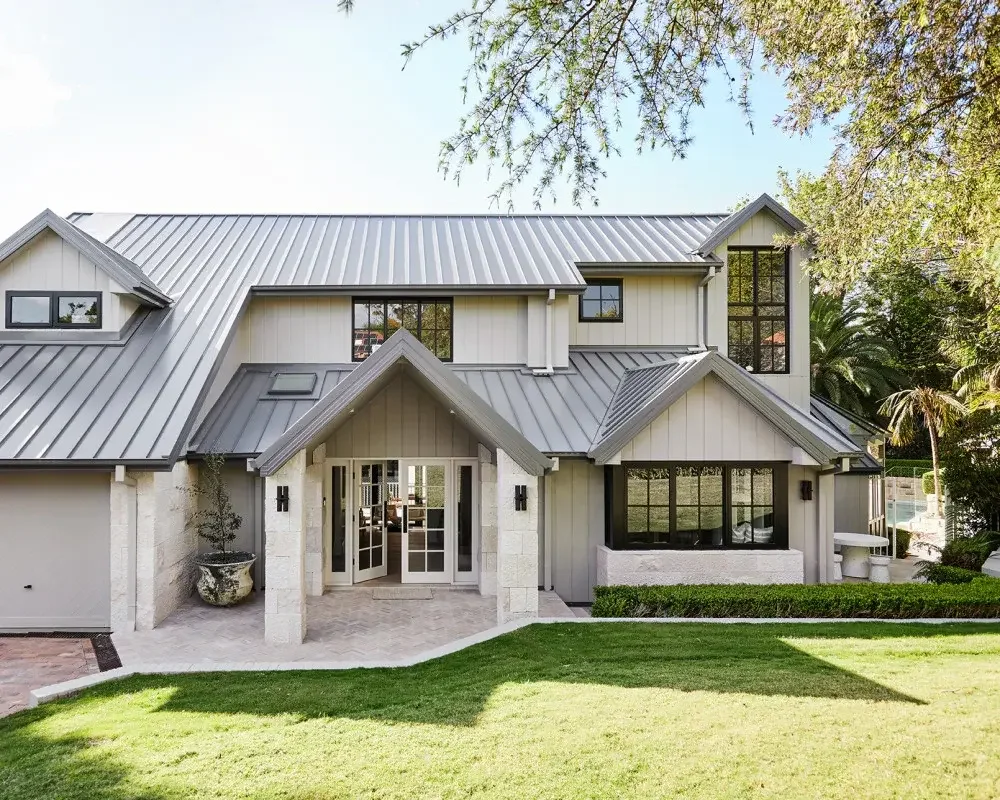
Best Siding Materials Ranked
Your selection in siding material will shape you home’s entire character and curb appeal. Fortunately, today’s marketplace is vast, offering choices that cater to every climate, budget, and aesthetic preference. A close look at some leading contenders may help you zero in on what’s right for you. We’ve ranked siding materials in terms of their durability, quality, reliability, longevity, ROI on your home value and overall price.
1. Fiber Cement or Engineered Wood
When it comes to quality siding, these two rise to the top—and truthfully, you can’t go wrong with either. Both are premium, long-term options that stand up beautifully to Nebraska weather while instantly elevating your home’s look.
Durability (10/10): Both excel in withstanding Midwest storms, temperature swings, and everyday wear. Fiber cement leads slightly in weather and fire resistance, while engineered wood performs exceptionally against impact and rot.
Quality (9.5/10): Premium across the board. These materials represent the high-end category for good reason. They are stable, dense, and precisely manufactured for consistent performance.
Reliability (10/10): Proven track records and trusted brands (James Hardie®, LP® SmartSide®) make these two the most dependable options on the market. These brands are the industry standard for performance in climates with significant temperature swings and heavy storms.
Longevity (9.5/10): With professional installation by Midwest Siding and basic care, both can last 30–50 years or more without losing their visual appeal.
ROI (9.5/10): Excellent. Homes with these siding types often see increased resale value thanks to their refined appearance and low maintenance requirements.
Price (7.5/10): Higher upfront investment, but long-term savings through limited repairs, energy efficiency, and lasting value. Your all-in costs level out over time compared to other siding materials.

Fiber Cement (like James Hardie®)
This product takes toughness seriously. It resists moisture, pests, and even fire, all while maintaining a crisp, painted finish that can be customized endlessly. Because fiber cement is heavier and more rigid than other materials, professional installation matters—something our team at Midwest Siding takes great pride in. With the right install and care, fiber cement siding can boost your home’s energy efficiency and resale value while delivering a clean, upscale appearance that lasts for decades.

Engineered Wood (like LP® SmartSide®)
For homeowners who want a sustainable edge, engineered wood offers a warm, authentic look made from recycled or renewable materials. Its panels mimic real wood beautifully but feature modern durability—impact resistance, fade protection, and long-term stability. It’s lighter than fiber cement and easier to work with, though slightly less fire- and moisture-resistant. If your goal is timeless charm with an eco-conscious story behind it, engineered wood fits that bill perfectly.

2. Vinyl Siding
Vinyl remains a popular choice among budget-conscious homeowners thanks to its lower upfront cost and wide color range. However, it does come with limitations—especially in climates like ours. The Midwest’s temperature swings can cause vinyl to expand and contract, sometimes leading to warping or cracking. It also lacks the depth and impact resistance of fiber cement or engineered wood. While vinyl can serve well for a first home or short-term investment, it’s not the most durable or flexible option long term.
Durability (6/10): Moderate. Vinyl handles general exposure but struggles with hail, high winds, and extreme temperature shifts — all common in the Midwest.
Quality (5/10): Widely available, but quality varies significantly by manufacturer and thickness. Lower-cost lines can feel lightweight and prone to warping.
Reliability (6/10): Consistent performance in mild climates, less so in high-impact or fluctuating environments.
Longevity (6/10): If well maintained and cleaned every year, vinyl generally lasts 20–30 years.
ROI (7/10): Decent for budget-conscious homeowners but limited compared to premium materials. Frequent repairs or replacements can offset savings.
Price (8.5/10): Most affordable option initially, which keeps it popular for first-time homeowners or flip projects.

3. Wood Siding
Natural wood remains unmatched in texture and variation. Classic cedar or redwood shingles create rich, organic character that many homeowners still adore. But beauty comes with upkeep: sealing or staining every few years is essential to prevent rot, mold, and pest damage. Impact and moisture can wear it down faster than modern alternatives, making wood a higher-maintenance option best suited for those who don’t mind the attention it requires.
Durability (5/10): Naturally strong but vulnerable to moisture, pests, and impact damage without steady upkeep.
Quality (8/10): Visually classic. Authentic grain, warmth, and tone bring character.
Reliability (4/10): Depends heavily on maintenance; neglected wood quickly loses its integrity.
Longevity (6/10): When properly sealed and regularly maintained, can last 20–40 years, though repainting or staining every few years is essential.
ROI (5/10): Moderate; while wood has timeless appeal, its upkeep demands (cleaning, repainting, etc.) may deter some buyers and eventually increases all-in costs.
Price (6/10): Mid- to high‑range. Initial materials can be costly, and maintenance adds to total lifetime expense.

4. Aluminum Siding
A longtime favorite that’s recently resurfaced, aluminum siding is durable, recyclable, and resistant to pests and rot. It’s a smart fit for eco-conscious homeowners looking for a lower-maintenance exterior. However, it can dent from hail or accidental bumps and may show seams unless you choose a concealed-hung version. Still, for certain styles or sustainability goals, aluminum can be a strong contender.
Durability (7/10): Resists rot, insects, and fire, though prone to denting from hail, ladders, or stray baseballs.
Quality (5/10): Improved modern finishes resist chalking and fading, however aluminum siding is the most vulnerable to denting and scratching.
Reliability (6/10): Performs moderately across climates, making it a dependable, but less common choice today.
Longevity (7/10): Can structurally last 40 years or more with minimal care (though does not include cosmetic longevity).
ROI (6/10): Moderate, especially for homeowners focused on sustainability, though limited market appeal and cosmetic vulnerability keeps it from being a premier ROI home improvement choice.
Price (7/10): Middle of the pack. Initial cost is moderate, with lower ongoing maintenance required.
Finding the Best Fit for Your Home
Ultimately, the right siding should reflect both your home’s style and your own lifestyle. Whether you favor the luxurious aesthetic and longevity of fiber cement, the natural warmth with durability of engineered wood, or a more budget-friendly material, there’s a solution that aligns with your goals.
At Midwest Siding, we’re here to help you compare your options honestly and confidently. From expert James Hardie® and LP® SmartSide® installations to careful wood repairs, our goal is to make sure you’re thrilled with the result and confident in your investment. Even if you choose another contractor, you’ll get the same level of respect and transparency we give every homeowner, because around here, you’re family.
Q&A
-
Fiber cement and engineered wood occupy the top spot for quality. These premium options are specifically designed to withstand the significant temperature swings and intense storms common in the Nebraska climate. Both materials provide excellent durability, longevity, and a high return on investment.
-
Vinyl is a budget-friendly choice with a lower upfront cost and a wide variety of colors. However, it lacks the impact resistance and depth of fiber cement and engineered wood. In geographies like Nebraska with extreme weather, vinyl is more prone to warping or cracking over time, whereas fiber cement maintains its structural integrity and upscale appearance for decades.
-
Natural wood requires consistent attention to prevent damage from moisture, rot, and pests. Homeowners must commit to sealing or staining the material every few years. While it offers an unmatched organic texture, the ongoing maintenance costs and labor make it a higher-commitment option compared to modern alternatives.
-
Longevity depends on the material selected and the quality of the installation. Fiber cement and engineered wood typically last between 30 and 50 years. Aluminum can structurally last over 40 years, while vinyl generally has a lifespan of 20 to 30 years. Natural wood can also last 40 years, provided it receives rigorous and regular maintenance.