
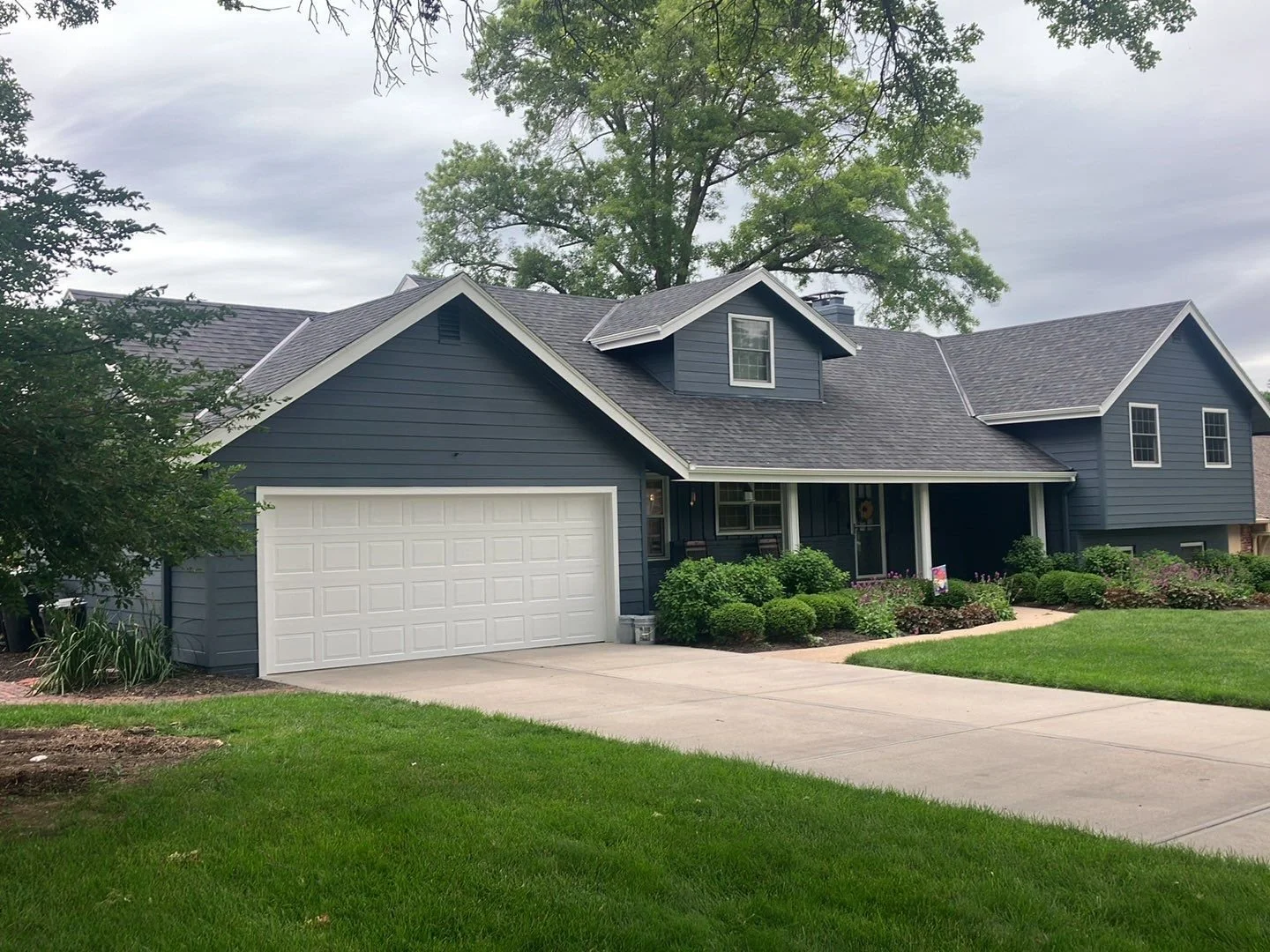
In the Midwest, siding has to curb appeal while standing up to hail, wind, moisture, summer heat, and freeze-thaw cycles that can wear down materials faster than many homeowners expect. Choosing the right siding, and installing it the right way, matters as much as the product itself.
Whether you live in Omaha, Elkhorn, La Vista, Council Bluffs, or a neighborhood or small town in between, understanding how siding performs in our climate helps you protect your home for the long haul.
Why Midwest weather is hard on siding
Midwest weather puts siding under constant stress. One week might bring driving rain and hail, the next direct sun and high humidity. In winter, temperatures swing across freezing, and snow and ice settle against exterior walls.
Each of these conditions affects siding differently. Hail can crack or chip more fragile materials. Wind can pull siding away from the wall if it is not properly fastened. Moisture from rain, snow, and ice can penetrate seams and edges, especially in moisture zones where water tends to sit. Over time, these small issues add up.
Siding that looks good on day one can start to fail early if it is not chosen and installed with our local climate in mind.
Which siding materials perform best over time?
Homeowners in Nebraska and Iowa typically consider four main siding options: vinyl, traditional wood, engineered wood such as LP SmartSide, and fiber cement such as James Hardie. Each behaves differently in Midwest weather and offers a different balance of cost, appearance, maintenance, and long-term performance.
Vinyl siding
Vinyl siding can be a budget friendly option and does not rot the way wood can. In ideal conditions, vinyl might last around 20 years. Ideal conditions and Midwest weather do not always line up.
Because vinyl is lighter and more flexible, hail, flying debris, and high winds can crack or break pieces much earlier than homeowners expect. It is not uncommon for someone to say they had vinyl installed just a few years ago and are already seeing damage after a big storm. The product itself may not be worn out, but our climate can cut its life short.
Traditional wood siding
Wood siding such as cedar lap or Breckenridge panel has a classic look and, when cared for, can perform well. In some cases, well maintained wood siding has stayed in decent shape for 50 to 60 years.
That kind of lifespan depends on consistent maintenance. Wood needs regular repainting and close attention to caulking. When homeowners stay ahead of peeling paint, failing caulk, and moisture issues, wood siding can continue to protect the home. When maintenance is ignored, the same products can develop rot and damage much sooner.
LP SmartSide
LP SmartSide is an engineered wood siding designed to resist rot and impact better than traditional wood. When properly installed and maintained, LP SmartSide can realistically last 30 years or more.
Moisture management is the key. If LP SmartSide is installed in areas where water and snow tend to sit, such as near the bottom of walls or in poorly drained corners, and those spots are not protected, freeze-thaw cycles can gradually break down the material. When those moisture zones are handled correctly, it is much easier to see decades of performance out of LP SmartSide.
James Hardie fiber cement
James Hardie is a fiber cement siding known for durability, fire resistance, and stable performance in a wide range of climates. With proper installation and maintenance, Hardie can last 50 years or more.
Like LP SmartSide, Hardie needs protection in moisture prone areas. When flashing, weather barriers, and drainage are done correctly, Hardie tends to hold up well under repeated freeze-thaw cycles and heavy moisture. Many homeowners choose it when they want a long-term, low-rot solution in challenging climates.
What causes siding to fail early?
When siding fails before it reaches its expected lifespan, it usually is not because of one major event. It is a combination of small issues that build up over time. Common causes include:
Moisture zones that are not addressed
Areas where snow, ice, and water sit against the house allow repeated wetting and freezing. That continuous stress can break down wood based sidings over time.Minor product flaws
Even well made materials can have small imperfections. When those flaws face years of harsh weather, they can become weak points where damage starts.Poor installation practices
Siding installed without proper prep, flashing, weather barriers, or fastening has less defense against storm conditions.Trapped moisture
When the systems behind the siding cannot breathe, moisture can build up inside the wall and quietly damage both the siding and the structure.
Each of these issues can shorten siding life, even when the material itself is capable of lasting much longer.
The installation details that matter most
The difference between siding that fails early and siding that quietly protects a home for decades often comes down to what happens before the first piece is hung. Experienced installers, like those at Midwest Siding, Inc. in Omaha, Nebraska pay close attention to a few key details.
Weather barrier and flashing
Before siding goes up, the home needs a properly installed weather barrier and flashing around windows, doors, and transitions. These components work together to keep water out while allowing the house to breathe.
The goal is not to make the wall airtight. It is to control how water moves and where it can drain away. When done right, the weather barrier and flashing act as a hidden shield behind the siding.
Room for drainage and drying
Caulking every seam is not always the best way to protect a home. In some locations, especially above windows, heavy caulking can trap moisture instead of letting it escape.
For example, leaving a small gap, often around a quarter inch, between the siding and flashing above a window creates a path for moisture to drain out and away from the wall. That gap helps the weather barrier do its job and keeps water from getting stuck between the siding and the framing. If you see this gap, know this is intentional and strategic. It’s a sign of great, educated installers.
Fastening to studs
Siding needs fastening directly to the structural framing, not only to the plywood or OSB sheathing. When siding is attached only to sheathing, high winds and storms can pull panels loose or off the house.
Taking time to locate studs and secure the siding properly makes a major difference in how well it stands up to severe weather.
How homeowners can extend siding life
Once siding is installed correctly, homeowners still play a big role in how long it lasts. Some of the most effective maintenance steps are simple and inexpensive.
Keep plants and trees away from siding
Shrubs, vines, and tree branches that touch the siding hold moisture against the wall and block sunlight that would otherwise help the home dry out. A good rule of thumb is at least a foot of clearance between vegetation and siding.Walk the exterior once a year
A quick annual inspection can catch small problems early. Look for failing caulk, chipped paint, soft spots, and areas where water seems to collect.Address paint and caulking issues promptly
For painted siding, small areas of peeling or cracking paint often are the first sign that moisture is getting behind the finish. Touch ups and repairs at this stage are far easier and less expensive than waiting for larger failures.Watch for drainage problems
Gutters that overflow, downspouts that discharge too close to the foundation, and landscaping that slopes toward the house can all push more water into contact with siding.
These simple habits can add years of life to siding and help protect the structure behind it.
When to repaint different siding materials
Not every siding needs the same maintenance schedule, and warranty language does not always tell the whole story. Based on real observations in our climate, repainting schedules often look like this:
Traditional wood siding
Budget wood siding often needs repainting within about five years to maintain protection and prevent early rot.LP SmartSide
LP can usually go a bit longer, but many installers recommend repainting every seven to eight years, with immediate attention to any areas where paint is chipping or failing.James Hardie
Hardie often holds paint longer, but darker colors may eventually fade and need refreshing. In many cases, homeowners start seeing the need for repainting or re caulking closer to the fifteen year mark.
These timeframes are general guidelines. Actual repainting schedules depend on color choice, exposure, and how well the home’s drainage and ventilation are managed.
When repair is not enough
Some damage is cosmetic and can be handled with spot repairs. Other issues are signs that it is time to consider replacement.
You may need more than a quick fix if you notice:
Widespread warping, cracking, or buckling
Soft spots or visible rot that return after repair
Large sections of siding pulled loose after storms
Frequent moisture issues inside the home near exterior walls
When problems repeat or spread across multiple areas, replacing siding with a better performing material and installing it with careful attention to moisture and structure can be a smarter long term investment than patching the same issues year after year.
Why Midwest Siding, Inc. in Omaha, NE is Your Right Choice
Midwest Siding is the perfect siding company for homeowners who care about how their siding looks and how it lasts. We repair wood, fiber cement, and composite wood siding, and we install new James Hardie or LP SmartSide, because those are the products we choose for our own homes. We know that in the long run these materials look better, last longer, carry stronger warranties, and can improve utility efficiency while ranking among the best return-on-investment home improvement projects for your property.
Our team helps you sort through vinyl, wood, LP SmartSide, and James Hardie so the material fits your home’s style, budget, and the way our weather really behaves. We take time to explain moisture zones, flashing, weather barriers, and fastening, and we install every project with the details that keep siding secure and allow your walls to breathe. When we see that a repair is enough, we say so, and when a replacement is the better long term choice, we explain why. The goal is not a quick sale; it is a home that looks good, dries out after storms, and stays protected for years, with a siding partner you can come back to whenever you are ready for the next step. Our goal is to put siding on your home once, do it right, and then only see your address again when you decide it is time to freshen things up with new paint.
Frequently Asked Questions
-
The lifespan of siding depends on the material, installation quality, and maintenance. Vinyl may last around 20 years in ideal conditions, traditional wood can perform for several decades when carefully maintained, and LP SmartSide and James Hardie can last 30 to 50 years or more when installed correctly and maintained over time. Midwest weather, especially hail and moisture, can shorten those timelines if the home is not protected properly.
-
The biggest reasons siding fails early are moisture exposure and poor installation. When siding is installed in moisture zones without adequate protection, or when the weather barrier and flashing are not installed correctly, the material can break down years sooner than expected.
-
Not always. Caulking is important in many locations, but sealing every seam can sometimes trap moisture instead of letting the home breathe. In areas such as above windows, leaving a small gap between siding and flashing allows moisture to drain out and helps prevent rot inside the wall.
-
Regular maintenance can improve siding performance. Keep plants and trees at least a foot away from the walls, walk the exterior once a year to check for failing caulk or paint, and address drainage problems promptly. These steps help siding dry out after storms and reduce the risk of rot.
-
Even a high quality siding product can fail early if it is installed incorrectly. Proper prep, weather barrier, flashing, and fastening directly to studs all help siding stand up to wind, hail, and moisture over the long term. Good installation turns a good product into a reliable system for the home.